24 October, 2026 | 3:49 AM


Dimagi Naxal Janta Party emerges
19-08-2026 12:00:00 AM
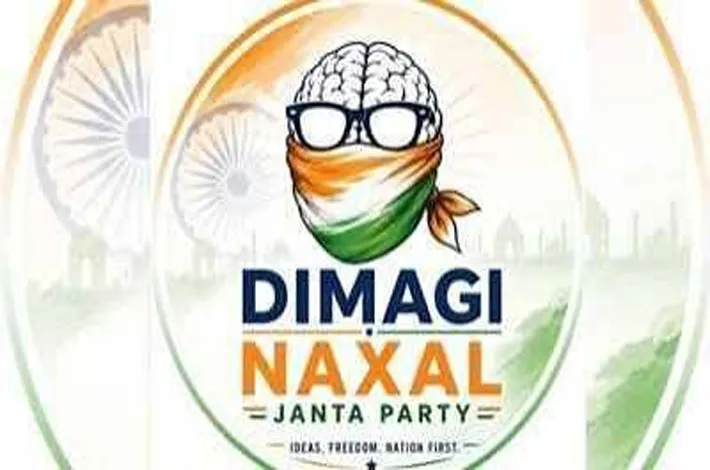
- From ‘Dimagi Naxal’ to DNJP: How a Political Label Became Gen Z’s New Satirical Badge
- A phrase from the Red Fort turns into an overnight internet movement
Metro India News | Hyderabad
A phrase intended as a political warning has acquired a very different life online. Within hours of Prime Minister Narendra Modi referring to a “dimagi naxal” mindset in his Independence Day address, social media users began turning the expression into an ironic identity — and by August 16, a satirical digital outfit calling itself the Dimagi Naxal Janta Party (DNJP) had emerged.
The movement is not a registered political party and does not claim to be one. Its own website describes DNJP as “a movement, not a party office”, gives its founding date as August 16, 2026, and says it has no official political affiliation.
The phenomenon closely resembles the earlier Cockroach Janta Party (CJP), another internet-born protest movement that converted an insulting political label into a rallying identity. CJP had already demonstrated how memes, satire and youth anger could spill from social media into wider political debate.
The speech that set it off
Speaking from the Red Fort on August 15, Modi said armed Naxalism was nearing its end but warned that an ideological or “dimagi” form of Naxalism remained. He called for such people to be identified and isolated.
The response was swift. Congress leader and former Union minister P Chidambaram said the following day that he was “proud” to be a dimagi Naxal, effectively reversing the intended sting of the label.
Congress leader Jairam Ramesh also questioned the terminology, while Union minister Kiren Rijiju later sought to explain whom the government meant by the expression, referring to Maoist sympathizers, separatist supporters and others holding positions the government regards as hostile to national interests.
“Dimagi Bano, Bewakoof Nahi”
DNJP's online identity is built around a deliberately cheeky message: “Dimagi Bano. Bewakoof Nahi.” Its website also uses the line “Sawaal karo, gulami nahi” and promotes questioning over unquestioning political loyalty.
Its manifesto does not resemble a conventional election document. Instead, it asks followers to question governments regardless of political affiliation, reject blind loyalty and bring together people who may vote differently but share a willingness to ask uncomfortable questions.
The website says there is no official symbol, no membership fee and no publicly identified founder. It presents the absence of a conventional leadership structure as part of the joke itself.
Instagram explodes
The movement's Instagram presence became the biggest talking point. News reports said the account crossed 1.7 lakh followers within days, while online users subsequently claimed the figure had moved beyond 2 lakh and, in some posts, above 2.5 lakh. Those higher figures have not been independently verified.
The account later appeared unavailable to several users. Social-media posts also alleged that it had faced cyberattacks or repeated takedowns, but those claims remain difficult to independently establish.
From memes to demands
The joke has also begun acquiring a civic vocabulary. Reddit discussions around the movement have proposed political-funding transparency, reasonable petrol prices and action against media outlets accused of spreading hatred or fake news. Other users have suggested term limits, transparent government finances, stronger qualifications for senior administrative appointments and restrictions on criminally accused politicians.
The bigger reaction
For supporters, DNJP is less about ideology than about reclaiming political language. The argument is simple: asking questions about a government should not automatically turn a citizen into an enemy of the state.
Critics, meanwhile, have questioned whether the movement risks trivializing the history and violence associated with Naxalism.
That tension may ultimately define DNJP. What began as a joke has already become a conversation about dissent, political labelling and the increasingly powerful role of internet humour in Indian public life.
For now, its unofficial slogan captures the mood best: think first, question freely and turn the label back on whoever invented it.