30 November, 2026 | 12:06 AM


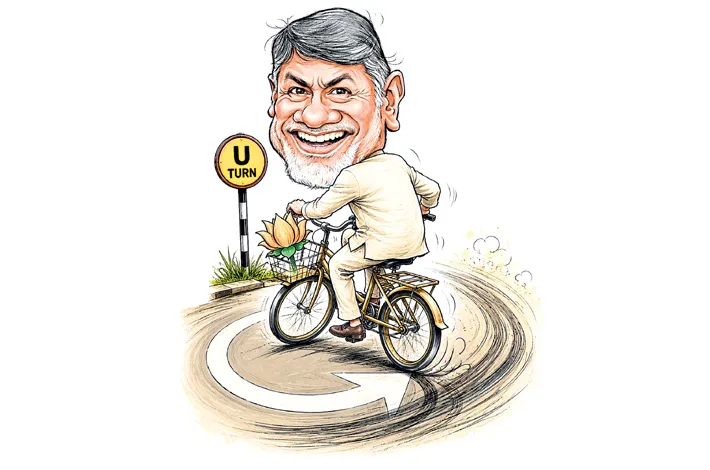
Chandrababu’s U-Turn
30-11-2026 12:00:00 AM
metro india news I hyderabad
N. Chandrababu Naidu has long specialised in the subtle art of political geometry. In the late 1990s he rearranged the furniture of national power from the Andhra Bhavan in New Delhi. Nearly three decades later he is at it again, this time helping redraw the very map of parliamentary seats. The man who once helped install two prime ministers is now midwifing a revised Delimitation Bill that southern states once feared would shrink their voice.
After the fractured 1996 Lok Sabha verdict, thirteen parties coalesced into the United Front. Naidu, then Chief Minister of undivided Andhra Pradesh and TDP chief, became its convener. Headquarters at Andhra Bhavan, he managed egos, ambitions and contradictions with the calm of a man who knew the arithmetic of survival. When V.P. Singh and Jyoti Basu declined the top job, the Front settled on Karnataka’s H.D. Deve Gowda. Naidu helped stitch the arrangement that kept Congress support from outside while keeping the BJP at bay.
Gowda lasted ten months. When Congress withdrew support in April 1997, the same Naidu swung into action. Over two feverish days of consultations he guided the Front towards consensus on Inder Kumar Gujral. Accounts from the time place him at the centre of the late-night meetings, offering rooms, mediating between Left leaders, Janata Dal factions and regional satraps until Gujral emerged as the least objectionable choice. Naidu later stepped down as convener and shifted external support towards the NDA, helping Atal Bihari Vajpayee form government. Three different prime ministers owed something to his brokerage.
Fast forward to 2026. The same political operator, once more Chief Minister of Andhra Pradesh and a key NDA partner after the 2024 elections, is shaping another national outcome. The Centre’s revised Delimitation Bill proposes a uniform 50 per cent increase in Lok Sabha seats across all states while freezing the existing inter-state proportional shares, based on the 1971 Census ratios, until 2051. The package is tied to the long-pending 33 per cent women’s reservation. Under the formula, Andhra Pradesh’s seats rise from 25 to 38, Tamil Nadu’s from 39 to 59, Karnataka’s from 28 to 42, Telangana’s from 17 to 26 and Kerala’s from 20 to 30. The five southern states together move from 129 to 195 seats, retaining roughly 23.76 per cent of the expanded House.
Naidu has been among the most vocal southern backers. He has argued that pure population-based delimitation after the next census would punish states that successfully lowered fertility rates. Andhra’s total fertility rate sits around 1.5, well below the national average. A proportionate expansion, he insists, protects the South’s relative weight while creating space for women’s seats without shrinking existing ones. He has urged opposition parties not to stand “on the wrong side of history” and linked the exercise to both federal fairness and women’s empowerment.
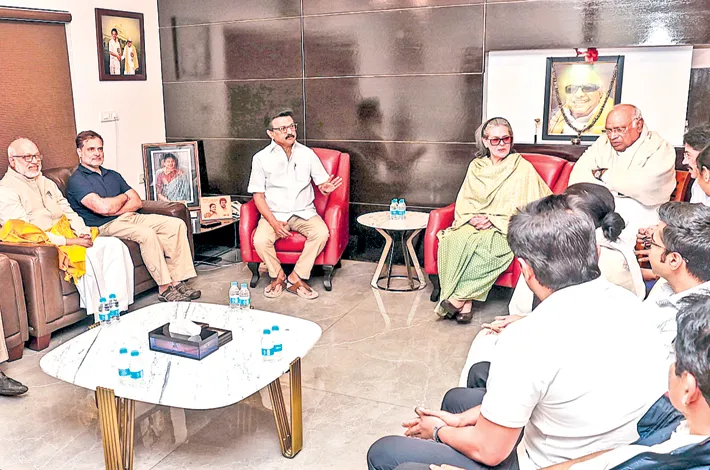
Reports indicate he has played a quiet but effective role in persuading DMK chief M.K. Stalin and other southern regional leaders that the revised text meets core concerns. Stalin, who earlier called population-based delimitation a conspiracy to throttle southern voices and burned copies of the earlier draft, announced support after two specific demands were written into the bill: Tamil Nadu’s 7.18 per cent seat share would not fall, and the 1971-based proportions would remain frozen for another 25 years. Other southern voices, including Jana Sena, have lined up behind the revised version.
The pivot is striking. Naidu was among the earliest and clearest southern voices warning against a pure population-driven redraw. In earlier remarks he spoke of freezing existing seat numbers or ensuring strictly proportional increases so that states which controlled population growth would not lose political weight. He had even floated the idea of encouraging higher fertility in Andhra to maintain demographic balance,
a sharp departure from decades of two-child norms. Once the Centre incorporated the 50 per cent across-the-board expansion and the long freeze on ratios, the same leader became one of its most energetic salesmen. Critics call it a classic U-turn executed with the smoothness of a seasoned coalition manager. Admirers call it pragmatism: better a guaranteed proportional rise than the risk of relative decline.
The Southern pivot
The pivot is striking. Naidu was among the earliest and clearest southern voices warning against a pure population-driven redraw. In earlier remarks he spoke of freezing existing seat numbers or ensuring strictly proportional increases so that states which controlled population growth would not lose political weight. He had even floated the idea of encouraging higher fertility in Andhra to maintain demographic balance, a sharp departure from decades of two-child norms. Once the Centre incorporated the 50 per cent across-the-board expansion and the long freeze on ratios, the same leader became one of its most energetic salesmen.