23 October, 2026 | 8:41 AM


Blot on judiciary
13-08-2026 12:00:00 AM
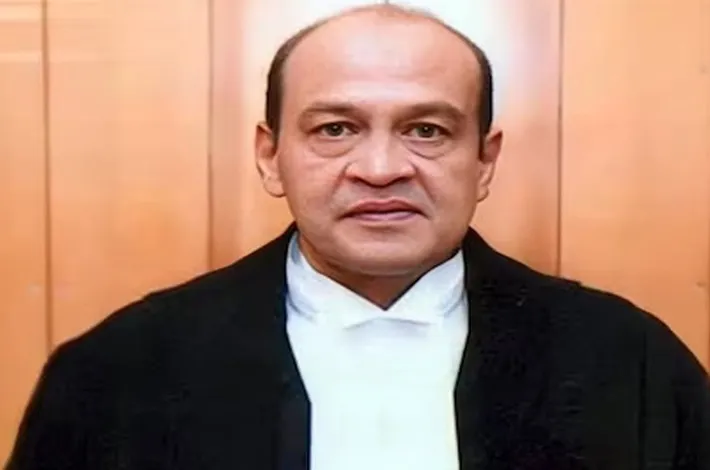
- LS Inquiry Committee Indicts Justice Varma
- Raising Fresh Questions on Judicial Accountability
metro india news I new delhi
A three-member parliamentary inquiry committee constituted under the Judges (Inquiry) Act, 1968, has found all three charges against former High Court judge Justice Yashwant Varma “proved” in connection with the discovery of substantial unexplained cash at his official residence. The report, tabled in both the Lok Sabha and Rajya Sabha on Wednesday, marks a significant institutional indictment in a controversy that has tested the boundaries of judicial integrity and parliamentary oversight for more than a year. The panel, headed by Supreme Court Justice Aravind Kumar and comprising Justice Shree Chandrashekhar (elevated from the Bombay High Court) and senior advocate B.V. Acharya, examined the events surrounding a fire that broke out on the night of March 14, 2025, at Justice Varma’s official residence at 30, Tughlaq Crescent in New Delhi. Firefighters responding to the blaze discovered large quantities of Rs 500 denomination currency notes—described in evidence as bundles, heaps and stacks, some partially burnt—in a storeroom on the premises.
According to the committee’s findings, Article I of the charges stands proved: substantial unexplained currency notes were present in the storeroom, which formed part of the official residential premises under the judge’s institutional control. Justice Varma, who was then a Delhi High Court judge, failed to furnish a satisfactory explanation regarding the presence, source or ownership of the cash. The panel rejected his contention that the storeroom lay completely outside his control, noting evidence such as a locked cabinet containing his personal articles that established a sufficient connection. Article II was also held proved. Material evidence was not secured or preserved; the evidentiary condition of the storeroom was disturbed before lawful sealing and inspection, and the later non-availability of the currency notes remains unexplained.
The committee attributed this primarily to a failure to preserve evidence and acquiescence in disturbance by members of the establishment attached to the premises, rather than direct proof that the judge himself physically removed the cash.
On Article III, the panel concluded that Justice Varma’s explanations—particularly his reply dated March 22, 2025, and subsequent stands—were “evasive, incomplete and misleading in effect.” They did not exhibit the candour, transparency and institutional responsibility expected of a constitutional court judge when tested against independent official witnesses and corroborative material.
The report noted there were “no signs of conspiracy” to frame him. The episode first triggered an in-house inquiry ordered by then Chief Justice of India Sanjiv Khanna. That committee concluded Justice Varma had “active or tacit control” over the storeroom and found the misconduct serious enough to warrant removal proceedings. In July 2025, more than 200 Members of Parliament signed a motion seeking his impeachment. Lok Sabha Speaker Om Birla constituted the statutory inquiry committee in August 2025. Justice Varma was repatriated to the Allahabad High Court and later resigned in April 2026 while the parliamentary process was underway, rendering formal removal proceedings largely infructuous though his resignation had not been fully notified at the time of the report’s tabling.
The precise quantum of cash could not be established because it was never formally seized, counted or inventoried at the scene—an investigative shortcoming the panel itself highlighted. Witnesses from the fire services and police described significant quantities rather than stray notes, supported by photographic and video evidence from the initial response.This case underscores deeper structural tensions in India’s system of judicial accountability. High Court and Supreme Court judges enjoy strong constitutional protections precisely to safeguard independence. Removal requires a rigorous parliamentary process under the Judges (Inquiry) Act, involving a motion by a specified number of MPs, a committee investigation, and ultimately a two-thirds majority in both Houses on an address to the President.
Such proceedings are rare and politically fraught. The in-house mechanism, while useful for preliminary assessment, lacks statutory force and public transparency. The Varma episode illustrates both the strengths and limitations of these dual tracks: an internal finding of substance led to a formal parliamentary inquiry that has now delivered a clear adverse conclusion, yet the judge’s resignation has short-circuited the full constitutional remedy of removal.The findings also revive questions about the standards of personal conduct expected of judges. Possession of large quantities of unexplained cash in official premises, even without a criminal finding of personal ownership in the strict sense, raises legitimate concerns about the appearance of propriety.
The committee’s emphasis on institutional control and the duty to preserve evidence places responsibility squarely on the holder of high office, independent of whether direct personal removal of the notes was proved. Justice Varma’s defence of denial coupled with conspiracy allegations was found wanting against the weight of eyewitness accounts from independent officials.Politically, the tabling of the report comes toward the end of the Monsoon Session and places the matter formally before Parliament for “such further action as may be considered in accordance with law.” While impeachment is now largely academic following the resignation, the report creates a permanent official record.
It may influence any residual administrative or other proceedings and serves as a cautionary marker for the judiciary.For the broader system, the episode highlights the need for clearer protocols when serious allegations arise against sitting judges: prompt securing of evidence by independent authorities, greater transparency in in-house processes where feasible without compromising institutional dignity, and timely resolution of parliamentary inquiries. Public confidence in the judiciary rests not only on the quality of adjudication but on the demonstrable integrity of those who occupy the bench. Unexplained cash in an official residence, followed by inadequate explanations and loss of material evidence, inevitably erodes that confidence.The committee’s 126-page report, accompanied by volumes of oral and documentary evidence, represents a meticulous exercise under statutory mandate. Its conclusion that all three charges are proved is unambiguous.
Whether this leads to further institutional reforms or remains an isolated indictment will depend on how Parliament, the executive and the judiciary respond in the coming months. For now, it stands as a rare and detailed official determination that a senior judge failed the high standards of transparency and responsibility required of the office. The cash-at-home controversy that began with a fire in March 2025 has thus reached a formal parliamentary milestone, reinforcing that no constitutional office is beyond scrutiny when questions of unexplained assets and institutional accountability arise.