27 September, 2026 | 12:01 AM


Assam elections spotlight: Can the state eradicate child marriage
29-03-2026 12:00:00 AM
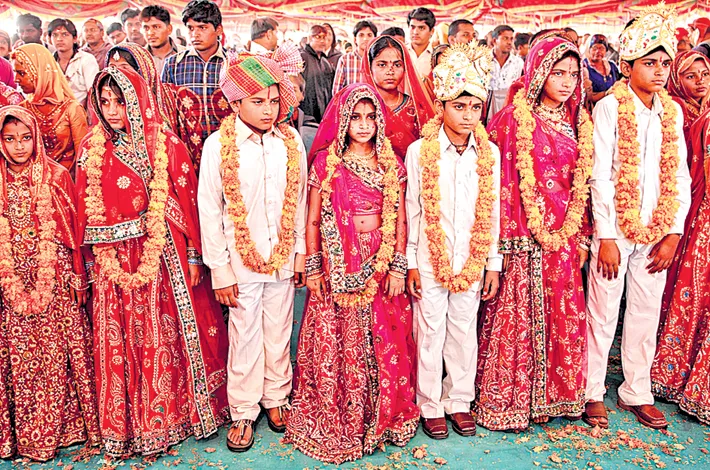
On April 9, Assam goes to the polls, and one issue dominating campaign discussions is the persistent social evil of child marriage. The state government has been in “mission mode,” launching aggressive police crackdowns, legal actions under the POCSO Act, and welfare schemes like “Mukhyamantri Nijut Moina” which provides financial assistance to encourage girls to stay in school. Reports indicate these measures have already led to a significant decline in child marriage cases. In a special broadcast, representatives from Assam’s major political parties came together to debate what more can be done to completely wipe out this scourge and position Assam as a blueprint for a Bal Vivah Mukt Bharat (Child Marriage-Free India).
A BJP spokesperson emphasized that child marriage is a grave social menace that should not be used as a political gimmick or to score brownie points. He praised the current government’s approach under Chief Minister Dr. Himanta Biswa Sarma for addressing enforcement gaps that previous “paper tiger” laws had failed to tackle. According to him, the way forward is to build on the incumbent government’s work by integrating law enforcement with social welfare schemes focused on education, health, and economic opportunities. He stressed the need to close the “enforcement gap” and ensure that children affected by child marriage are properly rehabilitated and mainstreamed into society.
A Congress representative acknowledged that no one supports child marriage but strongly criticized the BJP government’s methods, particularly the mass arrests (over 9,000 people, including 3,000 in a single day). He argued that such sudden crackdowns on marriages that took place years ago are not a sustainable solution. He pointed to practical issues like the amalgamation of 7,000 schools under the BJP regime, forcing children to walk long distances, which he said pushes girls out of education and into early marriage.
He mentioned that party’s focus would be on ensuring schools are accessible (within one kilometre), providing quality education, and prioritizing overall development of girls. He advocated for increased funding for education, free schooling, health awareness programs, skill development, and women’s empowerment through genuine opportunities rather than “doles” like direct cash transfers.
An office bearer of the Assam Mahila Parishad recognized the government’s steps but highlighted that poverty, seasonal migration, and economic insecurity often drive families to marry off daughters early to reduce financial burden. She agreed that awareness is important but insufficient without addressing bread-and-butter issues. She also stressed improving human resource quality from the grassroots level, scientifically designing education programs to “save childhood,” and combining awareness with necessary laws and regulations when communities remain unresponsive.
A spokesperson f the Assam Jatiya Party described child marriage as a “social disease” that cannot be cured by fear or raids but through discussion and education. He called for addressing root causes such as poverty, lack of education, and family awareness. His party’s concrete proposal, he said, includes forming “Child Marriage Prevention Cells” in every development block of Assam. These cells would conduct door-to-door visits, engage parents and families, and work closely with social organizations and Anganwadi workers to spread awareness. He stressed improving school retention rates (noting Assam’s high dropout rates) and tackling interconnected issues like child labor. The party advocates a partnership with communities rather than confrontation.
The discussion turned lively when participants questioned each other’s approaches. Congress accused the BJP of building hospitals without doctors and schools without sufficient teachers, claiming schemes like direct financial transfers (e.g., ₹9,000 to women) are superficial and create debt without real empowerment. They pushed for more industries, MSME support, and skill development to make women self-dependent.
The BJP spokesperson countered by pointing to visible on-ground achievements: world-class cancer institutes, over 26 medical colleges, improved capital expenditure, and efforts to bring in more doctors and teachers. He defended financial support schemes like Mahila Udyog as steps toward economic independence and ease of doing business at the grassroots. Critics from other parties and organizations argued for a “whole-of-government” approach involving education, health, women and child development, and law enforcement departments working in coordination. There was broad agreement on the need for better integration but sharp differences on whether the current model relies too much on punitive action versus dialogue and development.
As the debate concluded, the members expressed hope that whichever government comes to power after the April 9 elections will prioritize this social reform with sincerity. The ultimate goal: eradicating child marriage not just in Assam but setting a national example for a “Bal Vivah Mukt Bharat”. The spirited exchange highlighted both achievements and shortcomings, showing that while political differences exist on methods, there is consensus on the urgent need to protect Assam’s girls and build a more educated, empowered, and equitable society.