2 October, 2026 | 9:35 AM


Andhra Launches Population Policy
06-03-2026 12:00:00 AM
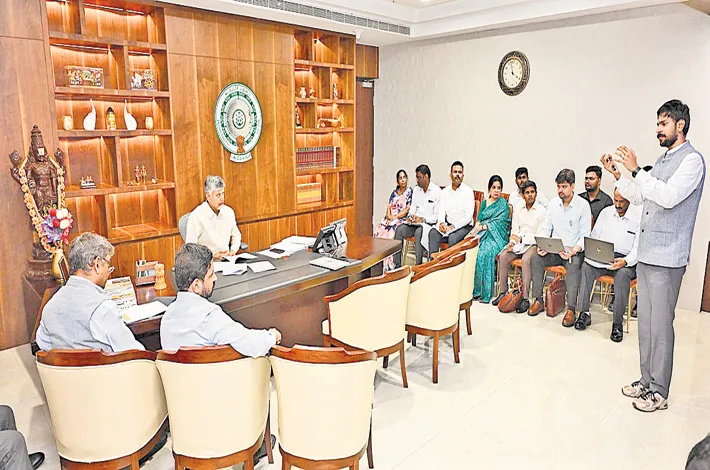
In a policy announcement with long-term demographic implications, Andhra Pradesh Chief Minister N. Chandrababu Naidu on Thursday unveiled a draft Population Management Policy in the State Legislative Assembly, signalling a shift away from decades of family planning measures toward a broader strategy aimed at sustaining population levels.
Addressing the Assembly, Naidu said the state is witnessing a sharp decline in fertility rates, making it necessary to reconsider earlier policies that focused primarily on population control. “For decades we emphasized family planning, but changing demographic realities now require us to move towards population care and management,” he said while presenting the draft policy.
According to the Chief Minister, Andhra Pradesh’s Total Fertility Rate (TFR) has dropped sharply over the past three decades—from 3.0 in 1993 to 1.5 now, well below the replacement level needed to maintain population stability. He warned that if the trend continues, the state could face challenges similar to countries such as Japan, South Korea and Italy, where falling birth rates have led to ageing populations and shrinking workforces.
The state currently records around 6.7 lakh births annually. However, projections suggest that nearly 23 percent of the population could be elderly by 2047 if fertility rates continue to decline. “A sharp fall in the working-age population will affect economic growth. That is why timely government intervention is needed,” Naidu said.
The proposed policy adopts a five-stage life-cycle framework: Matrutvam (Motherhood), Shakti (Empowerment), Kshema (Welfare), Skill Development, and Sanjeevani (Health and longevity). The approach aims to strengthen maternal health, family well-being, and human capital development.
Naidu also stressed the need to increase women’s workforce participation, which currently stands at 31 percent. Raising it to about 59 percent could help the state’s Gross State Domestic Product grow significantly, he said.
The government also plans to establish “Maternity Centres of Excellence” offering subsidised IVF services through a Public-Private Partnership model to support couples facing fertility challenges.
The draft policy will be placed in the public domain for a month to invite suggestions from citizens, experts, and stakeholders before it is finalised.