23 September, 2026 | 9:32 AM


Agastya Gurukulam: Bets on India’s traditional wisdom
09-08-2026 12:00:00 AM
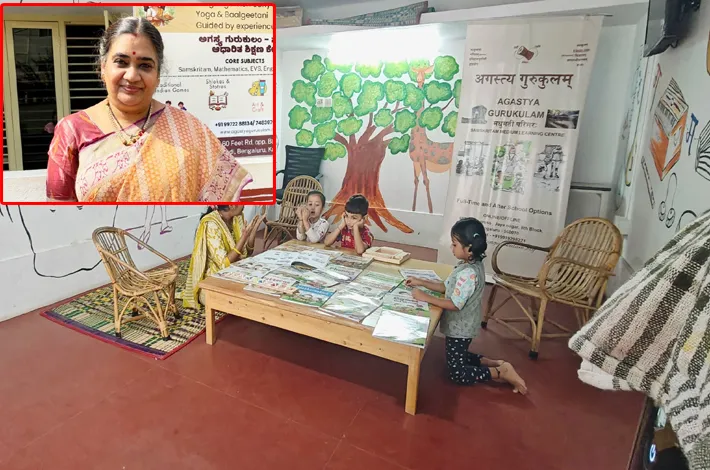
hema singuluri I hyderabad
At a time when education is increasingly associated with marks, examinations and technology, Agastya Gurukulam is attempting to take children in a different direction, towards Samskritam, Shastra, Indian traditions and practical learning.
Founded with the aim of reviving Bharateeya education, Agastya Gurukulam offers online and offline schooling, co-schooling and teacher-training programmes. Its current full-time programme caters to Grades K–8, with plans to expand up to Grade 12 after accreditation. The curriculum combines modern education with subjects including Samskritam, Ganitam, Vignanam, Itihasam, Bhoogolam, Maathrubhasha, Kanthasthikaranam, Yoga, Kalari, chess and visual arts.
Yamini Dalal, Gurukulam Executive Officer and CEO, describes the institution as the world’s first full-time online Samskritam immersion school. According to her, the larger objective is to preserve the “legacy of Bharat” and “de-colonise education” by helping children engage directly with Indian knowledge systems.
Learning beyond the syllabus
For Yamini, one of the biggest concerns with present-day schooling is the declining space for curiosity. She points to “Kuthoohalam” — curiosity — which she believes is often reduced when schools give greater priority to completing syllabi and achieving academic targets.
Agastya therefore seeks to move from a marks-driven approach towards learning that can prepare children for life. Practicality is central to this philosophy. Mathematics, for instance, can be explored through temple architecture, while Indian art forms and dance mudras become part of the learning experience.
The organisation’s curriculum also seeks to help students understand scriptures through Samskritam rather than relying only on translated versions. Its official curriculum says students learn to speak, read and write Samskritam while gradually developing the ability to understand more complex texts.
A school built around the child
“At Agastya, we are a pariwaar (family),” Yamini said, stressing that the child remains at the centre of the educational process. Respect for teachers and parents, character, discipline, emotional awareness and meaningful conversations are given importance alongside academics.
Parents are also included in the process through separate sessions aimed at helping them understand the educational approach. Yamini believes that students need support not only in academics but also in work-life balance, emotional development and social interaction.
She also sees technology differently. While acknowledging its usefulness, she said excessive dependence on technology can leave people increasingly isolated. Agastya attempts to combine learning with fun, social interaction, culture and heritage.
Building a community
The journey, however, has not been easy. Yamini said it took nearly five years to reach 100 students, with many parents eventually feeling that they were “destined to be here”. She believes support from even a small but committed group can help the Gurukulam grow.
The institution currently has physical and online full-time schooling, along with co-schooling and specialised programmes such as Kutoohalam, Jignasa and Pragnya. Its full-school programme is intended as a complete educational pathway rather than an additional class burden alongside conventional schooling.
Hyderabad next on the map
Agastya is now looking towards Hyderabad. Yamini said the team studied data, conducted research and organised online webinars before identifying Hyderabad as the next city for expansion. She sees the city as particularly suitable because its cultural heritage remains strong and Telugu continues to have a deep-rooted place in society. She also praised Gen Z for showing renewed interest in roots, traditions and culture.
The long-term ambition is considerably larger, opening 30 to 50 campuses over the next five years in cities considered strategically important. For Yamini, the objective ultimately goes beyond creating another school. It is about creating “change makers” who remain grounded while growing, and giving children a learning experience built around morals, character, discipline and cultural awareness.
“Samskritam should be recognised and get its glory back,” she said, describing Agastya’s larger vision as taking children back to their roots while making education enjoyable and valuable. With its focus on Samskritam, Shastra and Bharateeya knowledge, For Agastya, that revival begins with children, by giving them an education that connects tradition with the present and encourages them to learn not only for examinations, but for life.