24 September, 2026 | 11:48 AM


Society, suicides and murders
10-02-2026 12:00:00 AM
Globally, every year more than 720,000 people die by suicide, according to the latest World Health Organization (WHO) estimates for 2021, with figures around 727,000 reported in recent analyses. Some sources, including the Institute for Health Metrics and Evaluation, suggest the annual toll may approach 740,000 or higher in more recent projections. These numbers are likely underreported due to stigma, misclassification, and limited data in many regions.
Public estimates indicate that only about 10% of suicide attempts result in death, implying serious attempts exceed 7 million annually, while over 100 million people grapple with fleeting or persistent suicidal thoughts. The year 2020 marked a peak in many regions due to pandemic-related stressors, but global trends show a gradual decline in age-standardized rates over decades—from around 15 per 100,000 in the 1990s to about 9 per 100,000 recently—indicating prevention efforts can work.
With the world's population now exceeding 8 billion, roughly 75% of suicides occur in low- and middle-income countries, where mental health resources are scarce. Suicide remains the third leading cause of death among 15–29-year-olds globally. Of the reactive adult population (excluding children under 10 and those over 80, roughly 75–80% of total population), suicidal ideation affects about 1–2%, far outpacing annual population growth of around 0.8–1%.
Depression and other mental disorders contribute significantly—often linked to 60% or more of cases—while financial pressures, unemployment, and economic uncertainty play major roles, especially in impulsive acts during crises. Alcohol use disorders, chronic illness, relationship breakdowns, and social isolation also factor prominently.
Globally, men die by suicide at rates over twice that of women (around 12–13 per 100,000 vs. 5–6), though women report more attempts and ideation. Women have more suicidal thoughts, but men proceed to commit and succumb to suicidal deaths. Two-third suicide deaths are at the first attempt. Those who survive in their first suicide attempt are likely to commit again within 3 months to 1 year and not thereafter if they do not die in their suicide attempt.
Sudden calmness or happiness after a long depression is a clear sign of a suicide attempt. Preferring prolonged loneliness is another signal. Lesbian, gay, bisexual, transgender, and questioning youth are 5 times more likely to attempt suicides. Feeling trapped, hugely insulted, ignored by close people, and losing dependable persons may also trigger suicidal thoughts. Suicidal tendencies are indirectly caused due to increasing financialization of relationships, friendships, neighborhoods, societal associations, and even family bondings.
Economies need healthy societies and societies need healthy minded people. Suicides are an economic issue. Suicides are not predictable but are preventable. In India, the situation remains alarming. The National Crime Records Bureau (NCRB) reported 171,418 suicides in 2023, a slight increase from prior years, maintaining India's position as having the world's highest absolute number—accounting for roughly one-third of global cases.
The rate stands at about 12.3 per 100,000, second only to some nations like the US (around 14 per 100,000). Key Indian triggers include family disputes, marital issues, dowry demands, illness, and financial distress, with daily wage earners and young people disproportionately affected.
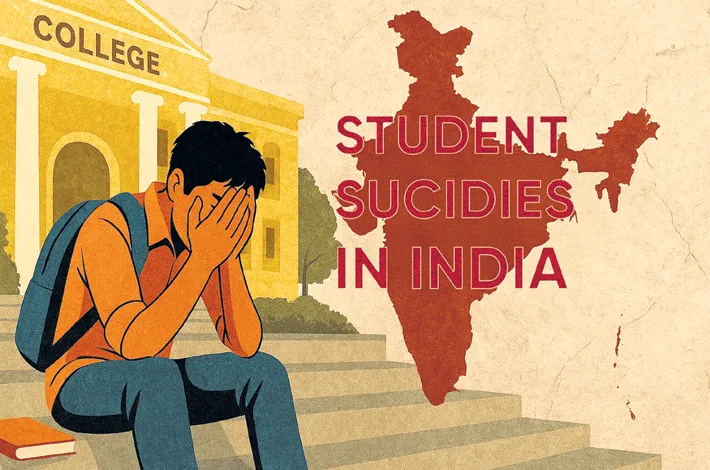
Student suicides have hovered around 13,000 annually in recent data, driven by academic pressure and lack of support.
Certain groups face elevated risks: LGBTQ+ youth are up to five times more likely to attempt suicide due to discrimination and rejection. Warning signs include sudden mood lifts after prolonged depression (often signaling a resolved plan), social withdrawal, and feelings of entrapment or worthlessness. Many countries, including India, parts of the US, UK, France, Russia, Germany, South Korea, and Brazil, still criminalize suicide attempts, imposing penalties that deter help-seeking.
Prevention outperforms post-crisis intervention. Non-profits like helplines (e.g., international ones like Befrienders Worldwide) and community programs offer vital support, while exploitative for-profit therapies highlight access inequities. Suicides reflect broader societal failures: the financialization of human bonds erodes support networks, turning relationships transactional and amplifying isolation.
Healthy societies require robust community ties, extended families, work-life balance, realistic expectations, manageable finances, and stable incomes. Governments, NGOs, families, and individuals share responsibility—through policies promoting mental health access, economic security, anti-stigma campaigns, and early intervention. While no law labels suicide as murder, each represents a collective societal shortcoming: a preventable loss that weakens economies and communities alike. Prioritizing prevention through stronger social fabrics and accessible care could save countless lives.
— Kishore Nuthalapati The author is CFO of BEKEM Infra Projects Pvt Ltd