24 October, 2026 | 9:02 PM


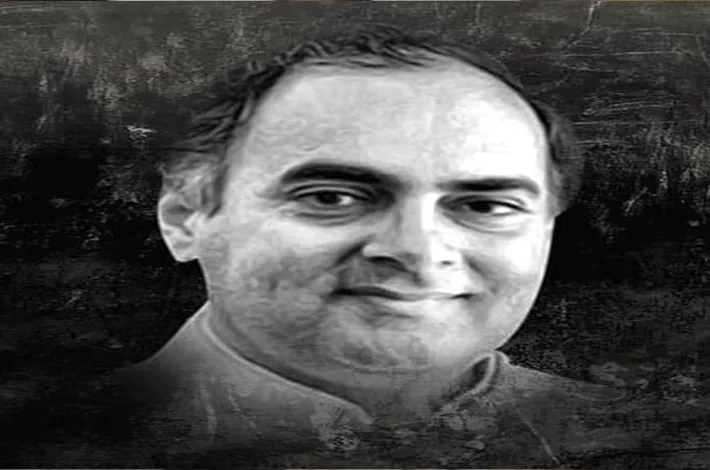
Rajiv demonized, maligned, misunderstood
20-08-2026 12:00:00 AM
Metro India News | Hyderabad
Rajiv Gandhi, among India’s brightest leaders, envisioned a modern India for the 21st century but was also among the most maligned and misunderstood. The political campaign focused on events including the Shah Bano verdict and subsequent Muslim Women’s Bill in 1986, the unlocking of the Babri Masjid’s inner gates, the Ayodhya shilanyas in 1989 and Rajiv Gandhi’s Faizabad campaign speech invoking Ram Rajya.
The strategy succeeded, contributing to Congress’s defeat in 1989. Yet the party won 197 seats and remained the single-largest party. Rajiv Gandhi was consulted on government formation but declined to forge alliances with the BJP or other parties. Choosing moral grounds over power, he resigned and became Leader of the Opposition. The National Front government subsequently took office with BJP and Left Front support.
Shah Bano Case
Criticism of the Muslim Women (Protection of Rights on Divorce) Act, 1986, following the Supreme Court’s 1985 verdict in the Shah Bano case, was, the argument goes, based on a misunderstanding of its provisions. Muslim Personal Law provides maintenance during the Iddat period and, for women unable to maintain themselves thereafter, permits a Magistrate to direct support from relatives who would inherit their property.
The 1986 Act primarily reinforced Muslim Personal Law, protected under Article 25 of the Constitution, while not taking away other legal remedies. The Supreme Court clarified that the Act did not deny Muslim women the right to maintenance under other laws, including Section 125 of the CrPC, leaving both avenues available.
Removal of Locks
The inner gate of Babri Masjid was unlocked following an order by Faizabad District and Sessions Judge K.M. Pandey on a petition by lawyer Umesh Chandra Pandey. The decision was not directed by the Congress governments at the Centre or in Uttar Pradesh.
The locks had been ordered in 1949 by District Magistrate K.K. Nayar after idols were placed inside the mosque. Their removal was essentially an administrative matter and did not alter the legal status of the dispute.
Shilanyaas
At the BJP National Council meeting in Palampur in June 1989, party president L.K. Advani brought Ayodhya onto the BJP’s political agenda. The Sangh Parivar soon launched Shila Yatras across the country, culminating in the November 9 Shilanyas, ahead of the general election. The Shilanyas site was outside the disputed area, suggesting that a temple and mosque could coexist. Rajiv Gandhi sought to use the opportunity to pursue a lasting solution.
However, on the night of the Shilanyas, a site map published by a national daily showed the spot as the temple’s main entrance, with the sanctum placed where the Babri Masjid’s central dome stood. Third Front parties used this to make Ayodhya a major election issue, portraying Rajiv Gandhi as facilitating the BJP’s temple plan.
Campaign Launch
On November 3, 1989, Rajiv Gandhi launched his election campaign from Faizabad. The Congress manifesto promised both a mosque and temple in Ayodhya, reflecting the composite culture symbolised by Ganga-Jamuni Tehzeeb and seen at other contested shrines in Uttar Pradesh.
The Ram birthplace was traditionally identified in the outer courtyard of the Babri Masjid. By 1855, a Ram Chabutra had been constructed to mark the spot. In 1885, Mahant Raghubar Das filed a civil suit in the Faizabad court seeking permission to build a temple over the Chabutra. The court rejected the plea, citing potential law-and-order problems. The proposal nevertheless envisaged the coexistence of the temple and mosque at the site.
Ram Rajya
Ram Rajya, for Gandhiji, was a metaphor for the Kingdom of God. It envisages moral governance, truth and non-violence, secular and inclusive, besides justice for the marginalized. Gandhiji’s Ram Dhun is distinguished and defined by Ishwar-Allah Tero Naam, Sab ko Sanmati De Bhagwan.
Pledging to bring back Ram Rajya (Ideal Welfare State), Rajiv Gandhi kickstarted his election campaign from Faizabad on November 3, 1989. Ram Rajya was the ideal held out by Mahatma Gandhi. Faizabad was chosen as the venue, as it was representative of Hindu-Muslim Unity, with two holy places side by side, showcasing Composite Indian Culture.
Rajiv Gandhi could not have compromised on Gandhian ideals. But, in the words of Rudyard Kipling, Rajiv Gandhi had to bear to hear the truth he had spoken, "Twisted by knaves to make a trap for fools."
Venkat Parsa