24 September, 2026 | 4:46 PM


Indo-US trade deal for Agriculture: Is it a fair deal?
13-02-2026 12:00:00 AM
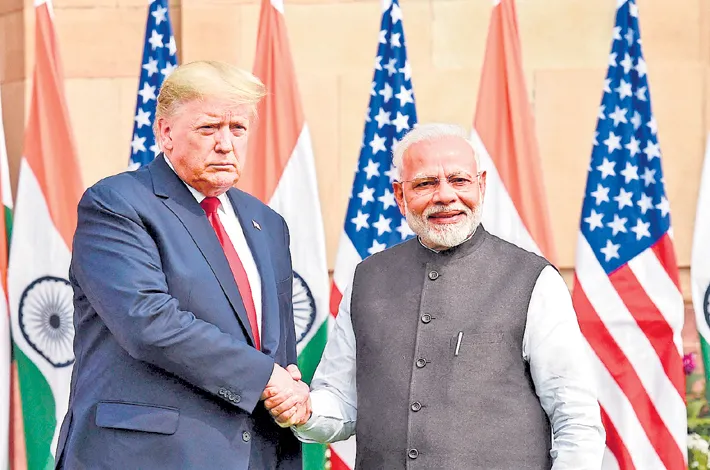
A proposed trade framework between India and the United States has ignited widespread controversy, with farmer unions across the country calling for nationwide protests and a general strike on February 12. The agreement, announced on February 3, aims to boost bilateral trade by slashing tariffs on a range of goods, including industrial products and select agricultural items. While the government hails it as an economic opportunity, critics, including opposition parties and farmers, label it a complete surrender that threatens domestic livelihoods, particularly in the agriculture sector.
The framework promises reduced or eliminated tariffs on certain U.S. agricultural and food products entering India, such as distillers' dried grains with solubles, soybean oil, red sorghum for animal feed, tree nuts, fresh and processed fruits, wine, and spirits. Additional products remain unspecified, fuelling speculation and panic among farmers who fear this could open the floodgates to more imports. Protesters argue that U.S. goods, backed by substantial subsidies and economies of scale, could undercut Indian prices, distorting local markets and impacting allied sectors like poultry and dairy through indirect effects on feed costs.
Government officials have pushed back against the criticism, insisting that sensitive sectors remain fully protected. Commerce Minister Piyush Goyal stated that hardly any item in the deal would unsettle farmers, emphasizing safeguards for dairy, poultry, cotton, and fuel ethanol. Agriculture Minister Shivraj Singh Chouhan went further, claiming that Indian farm products would gain zero-tariff access to the U.S. market, while American agricultural imports would continue facing tariffs in India. "The interests of our farmers have been fully protected," Chouhan said in a joint statement, highlighting that the deal was finalized late at night and presented to the world, receiving widespread national welcome.
Opposition leaders however have launched a fierce offensive, portraying the agreement as a betrayal. A Congress spokesperson called it "not a deal but a surrender," warning that India could become a dumping ground for American products, harming farmers and small-to-medium industries. Aam Aadmi Party leaders echoed this, accusing Prime Minister Narendra Modi of a "huge betrayal to the country" and deception against Indian farmers. With India still an agrarian nation employing a large portion of its population, memories of the 2021 farmers' protests remain fresh, turning this interim trade deal into a political and social flashpoint.
Farmer unions, including the Samyukta Kisan Morcha, All India Kisan Sabha, and Bharatiya Kisan Union, argue that the deal's framework-first approach—where details are negotiated later—leaves room for future governments to revise terms without binding assurances. They demand public debate and parliamentary oversight, expressing fears over undefined "additional products" that might include more agricultural items. Unions point out that even niche imports could have ripple effects, demanding that the government resist external pressure and cancel any concessions that compromise domestic interests.
A senior farmers’ union leader voiced deep concerns, describing the framework not as a deal but as an "order" from the U.S. "This is not a deal; it's been dictated by America," he said, highlighting potential losses for soybean, maize, almond, walnut, and dairy farmers. He emphasized U.S. subsidies—rising from $10 million in 2024 to $40 million in 2025 and potentially $45-50 million this year—which allow American products to enter cheaply, disadvantaging India's small-scale farmers. He stressed that the protests aim to pressure the government against bowing to foreign dictates, urging it to operate on its own terms for the sake of 1.5 billion people.
An agri-economist provided context on India's import dependencies, noting that the country already imports $36 billion worth of agro products annually, including 70% of its edible oil needs ($17 billion), $4 billion in dry fruits, and significant amounts of spices, coffee, and marine products. "We have a huge misconception that we're self-sufficient in agriculture," he said, pointing out surpluses only in carbohydrates like wheat, rice, and sugarcane, which are excluded from the deal. He argued that imports are essential to control inflation and meet demands for oils and proteins, as domestic production covers just 30% of edible oil requirements. He challenged farmer leaders to propose a comprehensive agricultural policy beyond subsidies, focusing on better seeds, technology, and extension services.
A Former Ambassador to the WTO offered a diplomatic perspective, noting that the deal follows standard negotiation norms: a framework agreement first, with details worked out through give-and-take. He acknowledged protections for cereals like paddy, wheat, corn and millets, as well as dairy and marine products (classified as industrial under WTO). However, he shared apprehensions about tariff reductions on tree nuts, soybean oil, fresh fruits, and vegetables, given India's lack of self-sufficiency and rising consumption. "The devil lies in the details," he said, questioning what concessions India might make in non-surplus areas like soybean cultivation in rainfed regions, where farmers cannot compete with heavily subsidized U.S. produce.
The debate underscored broader farmer grievances, including the absence of minimum support prices (MSP) enforcement, rising input costs like fertilizers and inadequate government backing against weather uncertainties. The agri economist suggested handing over agricultural produce market committees (APMCs) to farmer organizations to ensure direct benefits, while farmers unions countered that without MSP guarantees, farmers remain vulnerable. As protests loom, the real trade-offs of this framework remain under scrutiny. What India gains in industrial access and potential exports could come at the cost of agricultural vulnerabilities, raising questions about balancing economic growth with farmer welfare in an increasingly globalized market.