24 September, 2026 | 11:29 AM


Academy Awards nominations: The fabulous five, best of ’em all
04-02-2026 12:00:00 AM
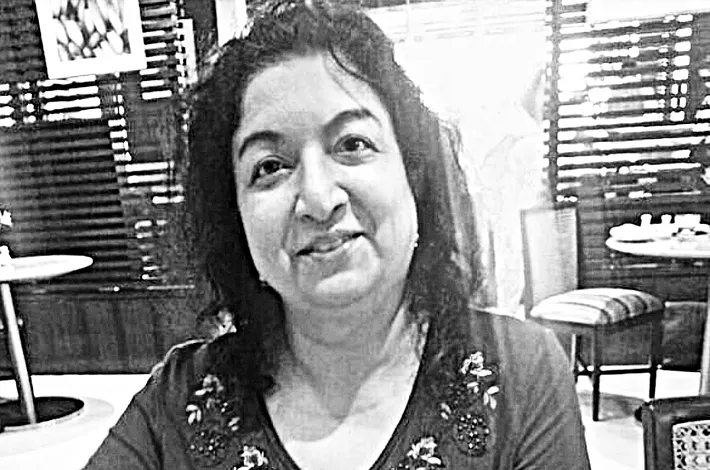
Compared to last year’s nominees, the spectrum has expanded, women of different ages and periods of history, and not one archetype among them
Every year, when the Academy Awards nominations are announced, it is a lens through which to view how far women have progressed (or regressed) in the notoriously male-dominated Hollywood industry.
The most talented actresses have to face ageism and redundancy, with just a handful like Meryl Streep and Susan Sarandon being able to buck the demand for youth and sex appeal.
This year’s Best Actress nominees have been picked from the list of high-concept films or intimate dramas. The action genre usually has little for women to do in the lead space.
Topping the list of nominees this year, already having won the Golden Globe and Critics Choice Award for her performance, is Jessie Buckley, as Agnes Shakespeare in Chloé Zhao’s haunting adaptation of Maggie O’Farrell’s bestselling novel, Hamnet. She is the wife of William Shakespeare in the period movie, who has to cope with the illness and death of her son, Hamnet, and the devastating grief that follows. The highlight of the film is a ten-minute unbroken shot of Agnes walking through her garden after the funeral—a sequence that has been hailed as the most “soul-crushing” moment of the year.
To prepare for the role, Buckley reportedly spent three months living in a rural English cottage, learning 16th-century herbalism and beekeeping, as Agnes is depicted as a folk healer in the film. In Nadia Khomami’s profile of her in The Guardian, Buckley said something profound: “[Agnes] was the full story of what I understand a woman to be… And their capacity as women, and as mothers, and as lovers, and as people who have a language unto their own beside gigantic men of literature like Shakespeare.”
When she realises that her son has died in her arms, her primal scream has been described by the director as coming from “beyond past, present, and future”. Interestingly, Zhao, who had won an Oscar for Nomadland, is only the second female director after Jane Campion to have been nominated twice.
Bugonia is Emma Stone’s third collaboration with director Yorgos Lanthimos—she won her second Oscar for his Poor Things (2023). She won her first for La La Land (2016) and has been nominated for Birdman (Supporting, 2014) and The Favourite (Supporting, 2018). With her 2026 nomination for Bugonia, she becomes the youngest woman to reach seven Oscar nominations (for acting and production) at age 37. A potential third win would place her alongside greats like Katharine Hepburn and Frances McDormand.
In the subversive comedy-thriller, she plays Michelle Fuller, a high-powered CEO whom two conspiracy theorists kidnap, believing she is an alien leader preparing an invasion of Earth. Audiences have noted that Stone’s challenge was to play the character with enough ambiguity that the audience remains unsure of her “humanity” until the final act. Her physical comedy—specifically a scene involving a ritualistic “decontamination” dance—shows the fearless eccentricity that has become her trademark.
Stephanie Zacharek of Time writes that the actress is “a bold, creative performer” who is “laceratingly funny and bracingly convincing.”
In a rare feat, all the actors of Joachim Trier’s Norwegian family drama Sentimental Value have received nominations; Renate Reinsve, working with Trier again after The Worst Person in the World, plays Nora Borg, an actress whose estranged, once-famous father wants her to do a film with him. Critics have called her performance “a prickly, intellectual exploration of resentment and the theatre of family. The film’s centrepiece is a meta-fictional rehearsal scene where Nora’s real-life trauma begins to bleed into the character she is playing for her father’s film. It is a vulnerable, layered performance that solidified her status as a global titan of cinema.”
In a proper director-actor collaboration, she helped co-write several of the “play-within-a-movie” scenes to ensure the dialogue reflected her own experiences with the frustrations of the acting industry.
Rose Byrne in the boldly titled dark comedy, If I Had Legs I’d Kick You, plays Linda, a woman recovering from a life-altering accident, who strives to keep her well-meaning family at a distance. The role, audiences feel, “demanded a delicate balance: Byrne had to be ‘unlikeable’ enough to be realistic, yet charismatic enough to keep the audience on her side. Her rapid-fire delivery of the script’s most cynical lines provided the year’s best laugh-until-you-cringe moments.” The film’s title is a direct quote from a real-life exchange Byrne had with a physical therapist during her research for the film.
In what Hollywood called the comeback of the decade, in the musical biopic, Song Sung Blue, Kate Hudson plays Claire Sardina, one half of a real-life husband-and-wife Neil Diamond tribute band. Critics have remarked that Hudson “captures the grit and fading glamour of a woman who spent decades performing in local bars and community centres. Eschewing the ‘sparkly’ tropes of most musical biopics, Hudson’s Claire is weary, hoarse, and deeply devoted to her husband. Her performance of ‘Holly Holy’ in a half-empty VFW hall is widely cited as the film’s emotional peak.” The actress, daughter of screen legend Goldie Hawn, performed all her own vocals live on set rather than lip-syncing to pre-recorded tracks, opting for a “rawer, less-perfect” sound to match her character’s life story.
The 2026 race has three previous winners/nominees—Stone, Buckley, and Reinsve—and two veteran actresses receiving their first-ever Lead Actress nominations—Byrne and Hudson. Buckley remains the favourite, but there has been a recent surge in favour of Hudson.
Regardless of who takes home the statuette on March 15, 2026, these five roles show that the leading lady of a popular or auteur-driven film is no longer limited to a small circle of romantic interests or angry fighters.
Compared to last year’s nominees, the spectrum has expanded—women of different ages and periods of history, and not one archetype among them. None of the male leads opposite them have managed a nomination (though Paul Mescal as Shakespeare is a surprising omission), which means that the women are not token make-up-the-numbers nominees but have had a large contribution in carrying these films over the nomination finishing line. They are all winners already!